For research and educational purposes only. This article covers publicly reported business news and is not medical advice or an endorsement of any product.
What did Samsung Biologics announce?
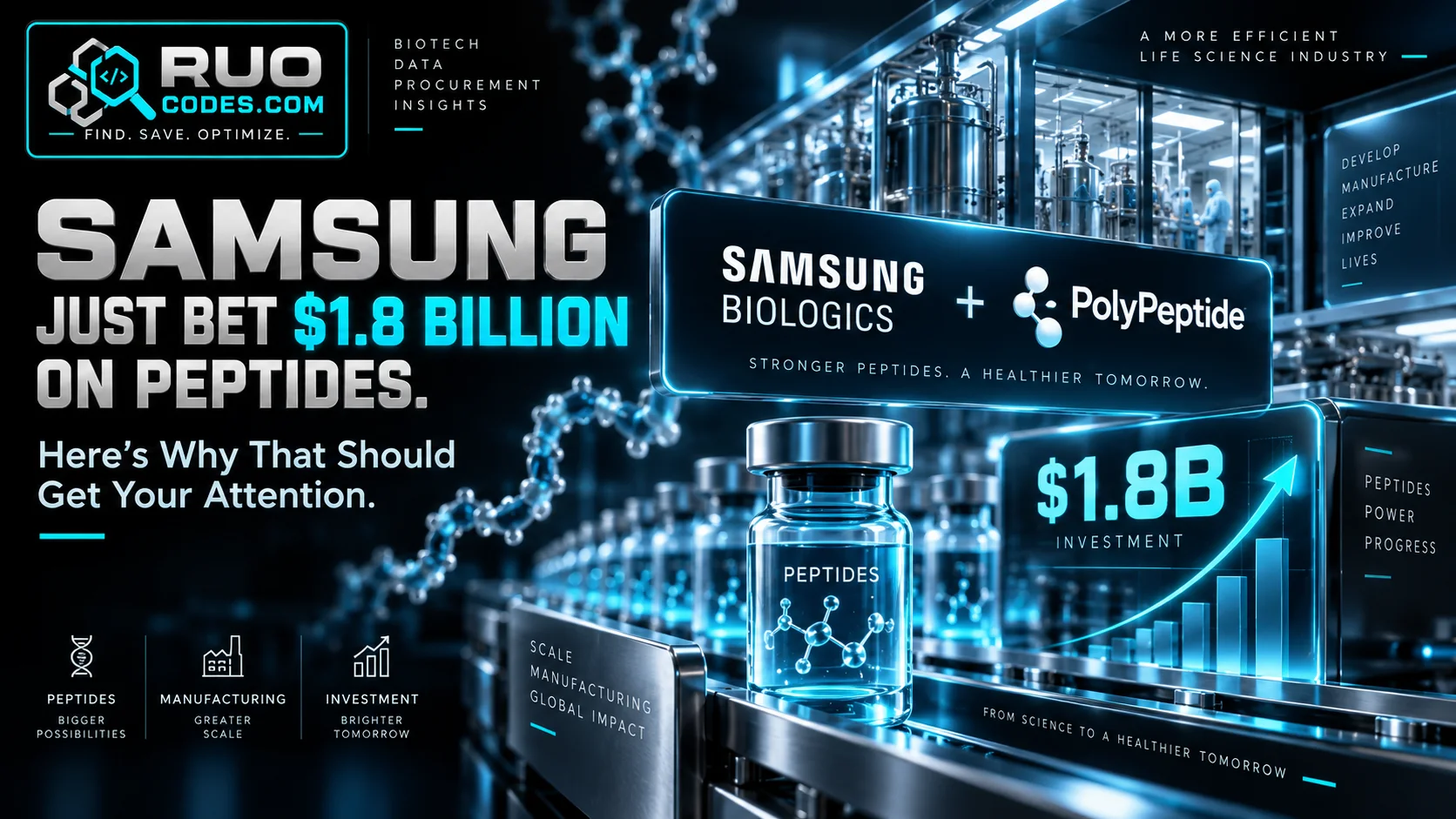
On July 20, 2026, Samsung Biologics announced an all-cash public tender offer for 100% of PolyPeptide Group AG's fully diluted share capital, excluding treasury shares. The offer values PolyPeptide at approximately CHF 1.46 billion (roughly $1.8 billion) and offers CHF 44.31 per share.
According to Samsung Biologics' acquisition announcement, the offer represented a 40% premium to PolyPeptide's unaffected share price. PolyPeptide's independent board members unanimously recommended the transaction, while its largest shareholder (representing approximately 55.65% of outstanding shares excluding treasury shares) committed to tender its stake.
The companies expect the transaction to close toward the end of 2026, subject to shareholder acceptance, regulatory approvals, and other customary conditions. If completed, PolyPeptide would become a wholly owned Samsung Biologics subsidiary.
Why does Samsung want a peptide manufacturer?
Samsung Biologics built its contract manufacturing business around large-molecule biologics, including monoclonal antibodies and antibody-drug conjugates. Acquiring PolyPeptide would add specialized peptide active pharmaceutical ingredient development and manufacturing to that platform.
The commercial driver is difficult to miss: metabolic peptide therapeutics have become one of the fastest-growing areas in pharmaceuticals. Drugs in the GLP-1 class have created major demand for synthesis, purification, analytical testing, and commercial-scale production. Our encyclopedia explains the research background of compounds such as semaglutide, tirzepatide, and retatrutide.
Peptide manufacturing is not capacity that can be added instantly. Commercial-scale solid-phase peptide synthesis requires specialized equipment, experienced teams, quality systems, and lengthy validation. Buying an established global CDMO can be faster and less risky than building an equivalent network from the ground up.
PolyPeptide's 2026 growth shows why capacity matters
PolyPeptide's own results show the scale of current demand. In its first-half 2026 results, the company reported revenue of EUR 236.6 million, up 41.6% year over year. Growth was driven primarily by metabolic therapeutics, which increased 72.7% and reached 68.4% of total revenue.
PolyPeptide also reported EBITDA of EUR 49.1 million for the first half, compared with EUR 4.4 million in the prior-year period. Those figures help explain why established peptide production networks are attracting strategic buyers: manufacturers are responding to measurable demand, not only speculative interest.
This is part of a broader peptide CDMO consolidation trend
Samsung's proposal is not an isolated transaction. CordenPharma completed its acquisition of AmbioPharm in August 2026, adding peptide API facilities in South Carolina and Shanghai to its global manufacturing network.
AmbioPharm's closing announcement emphasized expanded purification, lyophilization, upstream manufacturing capacity, and supply options across North America, Europe, and Asia. Together, these deals show major CDMOs competing for peptide expertise, capacity, and geographic reach.
What the Samsung–PolyPeptide deal could mean
1. More commercial-scale peptide manufacturing capacity
Samsung's capital, quality systems, and global customer base could support additional investment across PolyPeptide's manufacturing network. More capacity may help pharmaceutical developers move peptide programs from clinical development to commercial supply.
2. Higher expectations for quality and documentation
As larger pharmaceutical manufacturers expand into peptides, analytical rigor, batch consistency, traceability, and regulatory documentation become even more important. Those principles also explain why RUO Codes evaluates research vendors using third-party testing evidence. The article points to our COA verification guide for the testing categories that matter when evaluating research materials.
3. Continued investment driven by GLP-1 demand
Obesity and diabetes therapeutics are pulling investment into synthesis technology, purification, fill-finish support, and supply chains. Infrastructure built for high-volume metabolic programs may also advance capabilities relevant to other peptide drug candidates.
4. Greater supplier concentration
Consolidation can bring investment and reliability, but it can also place more capacity under fewer owners. Researchers and industry observers should watch how acquisitions affect pricing, lead times, customer choice, and access to specialized manufacturing services.
5. More acquisitions are likely
When demand grows faster than new facilities can be qualified, purchasing existing capacity remains attractive. Samsung Biologics and CordenPharma may not be the last large manufacturers to pursue peptide CDMO acquisitions.
Does this acquisition affect research-grade peptide vendors?
Not directly. Samsung's proposed acquisition concerns pharmaceutical peptide APIs and regulated commercial manufacturing. That is different from the research-use-only market served by vendors in the RUO Codes directory.
The broader signal still matters. Large investments in peptide manufacturing can improve synthesis technology, analytical methods, workforce expertise, and supply-chain infrastructure. They also increase public attention, making it more important to distinguish approved medicines, clinical-stage compounds, and research-use-only materials.
Why this matters if you are new to peptide research
This transaction shows that peptide science is no longer a small specialty category. Major pharmaceutical manufacturers are committing substantial capital to the infrastructure required to make peptide therapeutics at scale.
That does not mean every peptide claim is validated, and it does not turn research materials into approved treatments. It means careful sourcing, accurate terminology, evidence-based interpretation, and reliable analytical testing matter more as the field grows. Readers can explore individual compounds in the RUO Codes peptide encyclopedia and compare the documented testing practices of research peptide vendors.
Frequently asked questions
How much is Samsung Biologics paying for PolyPeptide?
The all-cash offer values PolyPeptide at approximately CHF 1.46 billion, equivalent to roughly $1.8 billion when the transaction was announced.
Why is Samsung Biologics buying PolyPeptide?
The acquisition would add specialized peptide API manufacturing, experienced teams, and a global production network to Samsung Biologics' CDMO platform as demand for GLP-1 and other peptide therapeutics grows.
When is the Samsung PolyPeptide acquisition expected to close?
The transaction is expected to complete toward the end of 2026, subject to the tender conditions, regulatory approvals, and other customary closing requirements.
What is a peptide CDMO?
A peptide contract development and manufacturing organization helps pharmaceutical and biotechnology companies develop, scale, test, and manufacture peptide active pharmaceutical ingredients and related products.
Does the deal endorse research-use-only peptides for human use?
No. The transaction concerns pharmaceutical manufacturing infrastructure. Research-use-only compounds are not approved for human or animal consumption, and this article does not recommend their use.
Primary sources and further reading
- Samsung Biologics: all-cash offer to acquire PolyPeptide
- PolyPeptide: first-half 2026 financial results
- AmbioPharm: CordenPharma acquisition completed
- Reuters: Samsung Biologics launches $1.8 billion PolyPeptide bid
Research-use disclaimer: This article reports on business and pharmaceutical manufacturing developments. It is not medical advice. Research-use-only compounds discussed elsewhere on RUO Codes are intended solely for laboratory research and are not for human or animal consumption.